What are perils and hazards?
In the world of insurance, a "peril" is an event or circumstance that could result in property damage. Your homeowners, condo, or renters policy may contain a list of covered perils, such as fire, lightning, and vandalism. If a covered peril causes damage, your insurer may pay to repair, replace, or rebuild your home or property, minus your deductible. A "hazard" increases the chances of a peril occurring.
Explore Progressive's editorial standards for Answers articles to find out why you can trust the insurance information you find here.
Key takeaways
Standard homeowners policies may cover certain perils that can cause damage to your home and belongings, such as fire or theft
A hazard is not the same as a peril, but it increases the chance of a peril occurring
A "named perils" policy means your homeowners insurance only covers specific perils listed by your policy
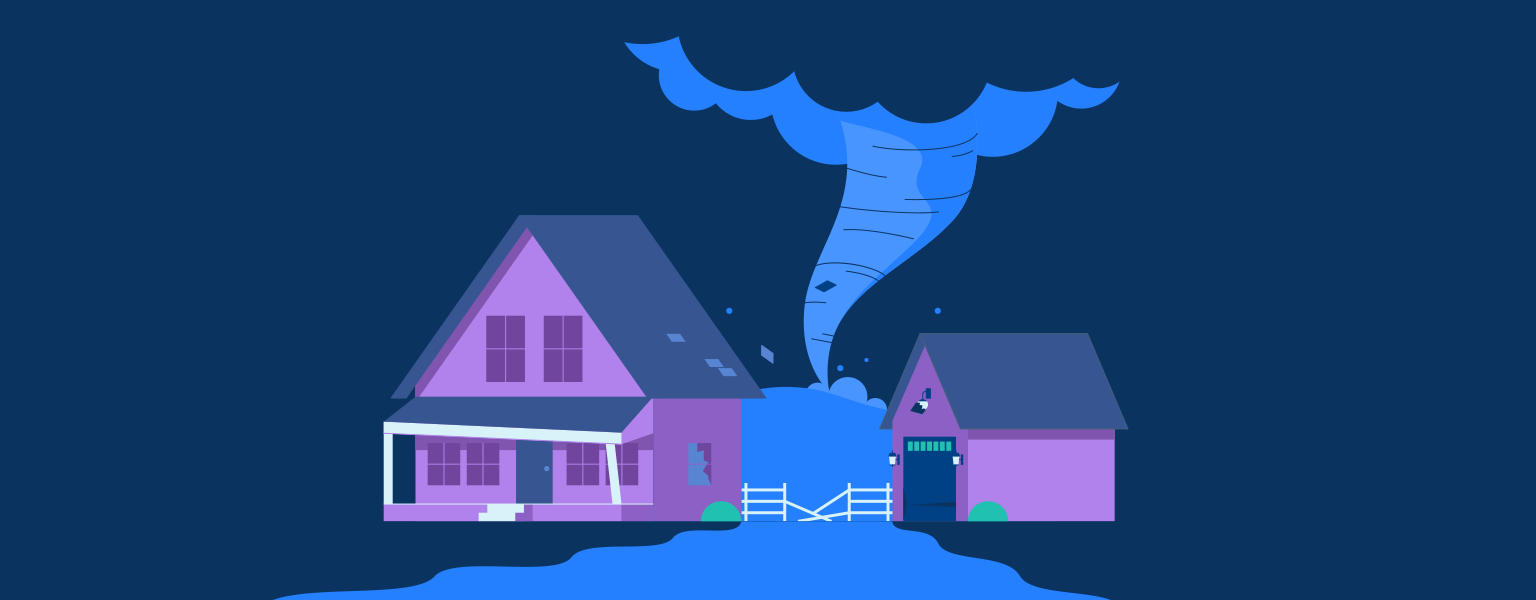
What's the difference between a peril and a hazard?
A peril is the cause of the loss, and a hazard increases the likelihood of a peril happening. Perils and hazards aren't synonyms, but they're sometimes mistakenly interchanged.
Example:Suppose a fire begins in your chimney and destroys your home. In that case, the fire is the peril, and the dirty or defective chimney is the hazard.
What is a covered peril?
A covered peril is a specific circumstance or an event that could result in property damage and that your insurance policy may cover.
When you file a claim for a covered peril — such as a lightning strike, fire, theft, vandalism, and wind or hail damage — your insurance company may reimburse you for the damage, minus your homeowners deductible.
Your dwelling coverage, which protects your home's structure against damage, might have different covered perils than your personal property coverage would in a policy — for example, fire damage may be covered under both, but theft may only apply to personal property coverage.
Examples of perils
Perils can range from weather events to other events like theft or vandalism. Here are some common perils listed on standard homeowners insurance policies:
- Fire or lightning: Includes damage caused by lightning or an event caused by a lightning strike, such as a fire
- Weight of ice, snow, and sleet: Refers to snow accumulation or an ice dam that causes damage to your home, such as a roof leak
- Windstorm & hail: Includes damage caused by a wind or hailstorm
- Theft & vandalism: Refers to stolen belongings and willful damage to your property
- Accidental water/steam overflow or discharge: Refers to water damage from a sudden break or blockage in your plumbing or HVAC system
- Falling objects: Includes damage from a tree that falls on your house
- Power surges: Refers to sudden and accidental damage from an artificially generated electrical current or power surge
Named perils vs. open peril
Named perils and open peril refer to how your policy covers the causes of loss:
What is a named perils policy?
A named perils policy means your policy only covers specific or "named" perils listed in your policy. If you file a claim, the damage must result from a listed peril to be covered. This type of policy limits the number of events or types of damage your insurance may cover when you file a claim. Coverage for your personal property is generally provided on a named peril basis.
What is an open peril policy?
Sometimes referred to as a policy with coverage for "all perils," open peril means you're covered against all perils unless your policy specifically excludes the loss. Because a policy with coverage for all perils includes coverage for more perils, it's typically more expensive than a named perils policy.
What is a hazard?
In insurance, a hazard is a situation or factor that increases the likelihood of a peril. Hazards don't directly cause damage, but they amplify the chances of a loss occurring. For example, if a large tree limb hangs over your roof, it could be considered a hazard because it makes roof damage more likely.
The term "hazard insurance" has been made popular by mortgage lenders when referring to dwelling coverage because they typically require the coverage, at a minimum, to protect their interest in the home's structure.
Examples of hazards
Understanding hazards is important for managing potential risks on your property. Physical hazards elevate the risk of loss, such as a swimming pool that can increase the likelihood of injury or drowning. Moral hazards stem from carelessness or a lack of concern for risk, such as failing to address regular home maintenance like a loose board on your deck.
Here are some common household hazards:
- Slippery floors or toys left out that may cause someone to fall
- Space heaters, faulty wiring, unattended candles/cooking that can lead to a house fire
- Swimming pools (especially pools not surrounded by at least a four-foot fence and locked gate), hot tubs, trampolines, and any other attractive nuisance
- Pets, such as certain dog breeds that may cause harm to others
- Missing shingles on your roof that may result in a roof leak or other roof damage
A hazard is not the same thing as "hazard insurance," which is a term that mortgage lenders often use to describe dwelling coverage.
Use our homeowners insurance calculator to help estimate homeowners insurance coverages and limits to better protect your home, belongings, and assets.
Get homeowners insurance for protection against common perils

Online
Compare and customize your coverages and limits when you quote online.
Quote homeowners insurance online
Call a rep
Talk to a licensed representative who can help you quote home insurance.
Call 1-866-749-7436

Quote homeowners insurance online or call for advice
Learn more about home insurance policies.